
⏱️ Estimated reading time: 5 min
Origins and historical context
Buddhism emerged in northern India around the 5th century BC.. C., in a social context dominated by the caste system and the ritual practices of the Vedic religion. Siddhartha Gautama, a prince of the kingdom of Kapilavastu, after coming into contact with human suffering, He abandoned his life of luxury to seek a way out of the pain of existence.. To the 35 years, after a deep meditation process, achieved spiritual awakening or bodhi, becoming the buddha, that is to say, "the awakened one".
More than a reaction against an established religion, Buddhism was a transformative proposal based on direct experience, observation of reality and overcoming suffering.
Fundamental teachings
Buddhist doctrine is based on the recognition that existence is marked by dissatisfaction. (dukkha), and proposes a path to free yourself from it. This way is expressed in the Four Noble Truths:
- Life is marked by suffering.
- The origin of suffering is desire and attachment.
- Suffering can be extinguished.
- The way to do this is Eightfold Path, a set of ethical practices, meditative and wisdom.
The Eightfold Path includes:
- Correct vision
- Right intention
- correct word
- Correct action
- Correct livelihood
- correct effort
- Correct care
- Correct concentration
Through this practice, the person understands three characteristics of existence:
- Anita: the impermanence of all things.
- Anatman: the absence of a permanent self.
- Shunyata: the emptiness or interdependence of all phenomena.
Renaissance and nirvana
Buddhism teaches that beings are reborn again and again in different forms (human, animals, heavenly, etc.) conditioned by karma, that is to say, for past actions. The ultimate goal is not to continue in this cycle (samsara), but to get out of it by awakening and attaining the nirvana, a state of freedom from suffering, desire and ignorance.
The Buddhist community
Those who decide to follow the Camino can do so as laymen or as monastics., forming part of the sangha (community). Community life supports the practice of dharma (the teachings) through meditation, the study, Ethics, mindfulness and generosity.
Over time, Different forms of Buddhism emerged, among them:
- Theravāda («Way of the Elders»): conservative and focused on individual liberation. Predominates in Sri Lanka, Thailand, Burma and Cambodia.
- Mahāyāna ("Great Vehicle"): emphasizes compassion and the ideal of bodhisattva, who postpones his own liberation to help others. It was developed in China, Korea and Japan.
- Vajrayana («Diamond Vehicle»): emerged in Tibet, incorporates tantric practices and complex visualizations, next to a strong monastic structure.
Buddhas and bodhisattvas
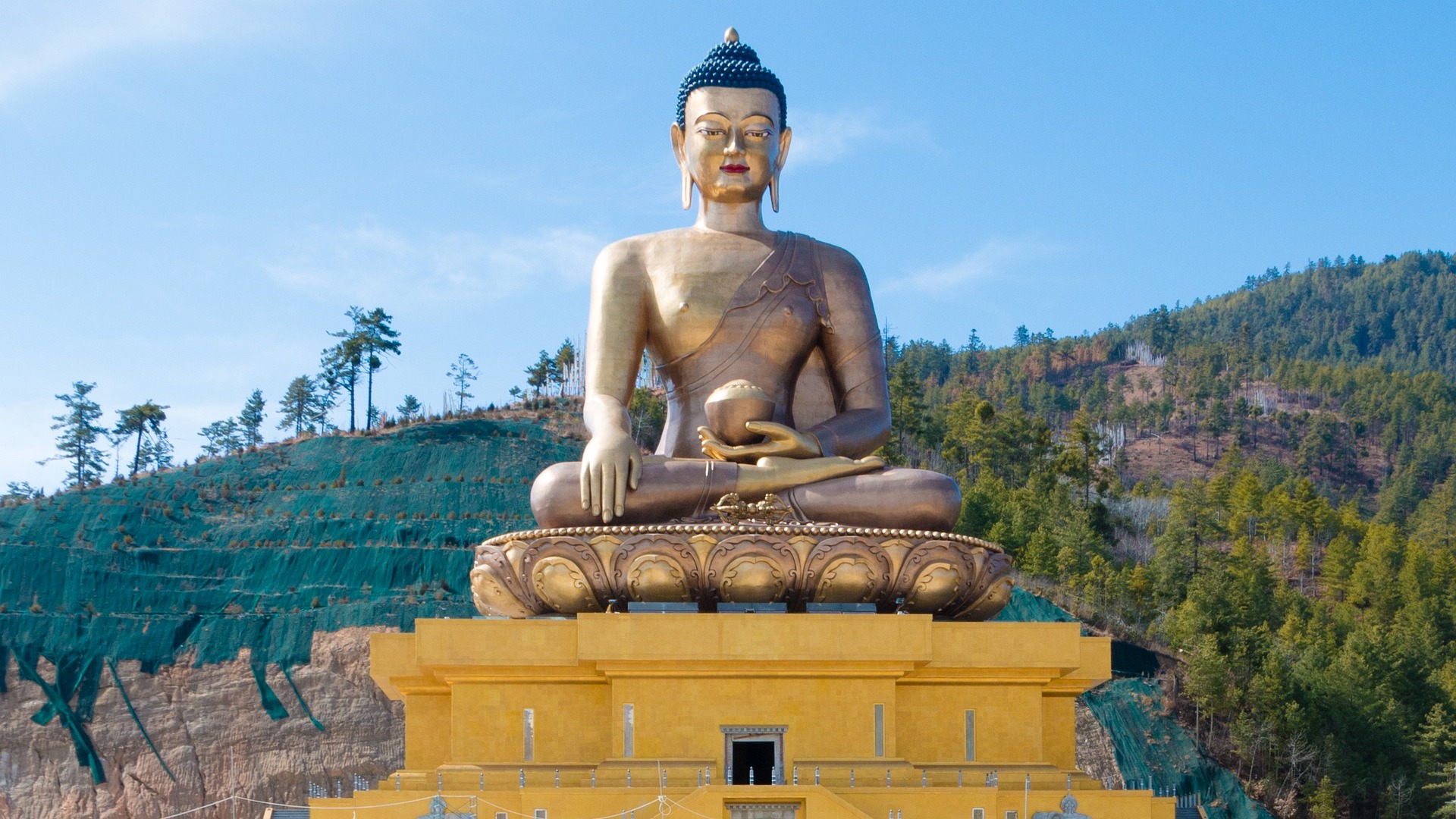
In Buddhism Buddha is not worshiped as a god, but he is revered as a teacher and example. Siddharta Gautama was a human being who achieved enlightenment, and his life shows that anyone can do it. In the Mahāyāna and Vajrayāna traditions, multiple Buddhas and Bodhisattvas are recognized, symbolic or mythical figures that represent spiritual qualities such as wisdom, compassion or transformative energy. One of the best known is Avalokiteshvara, he bodhisattva of compassion.
Buddhists believe that any human being has the ability to awaken and become a Buddha.. That's why, The veneration of images does not imply idolatry, but recognition of the possibility of awakening in oneself.
Buddhist practices
The central practice of Buddhism is meditation, which takes many forms: full attention (mindfulness), concentration on breathing, analytical or devotional meditation, among others. Besides, Buddhists practice ethics (do not harm, Do not lie, do not steal, etc.), the study of traditional teachings and rituals, that vary according to cultures.
Although Buddhism began with little ritualism, over time it incorporated local practices: use of mantras, incense, temples with symbolic images, festivities and ceremonies. This is not contradictory to his doctrine, but part of its ability to adapt without losing its essence.
Expansion and evolution
After the death of the Buddha, His disciples preserved his teachings orally. In the 3rd century BC. C., The Indian emperor Ashoka adopted Buddhism and spread it throughout much of Asia. From there, Buddhism spread to Sri Lanka, Southeast Asia, China, Corea, Japan and Tibet, adapting to different cultures.
throughout history, there have been internal divisions, doctrinal conflicts and even episodes of violence between Buddhist groups or those linked to political power. However, unlike other religions, Buddhism does not contain in its fundamental teachings a theological justification for violence. The principle of not harming any living being (ahimsa) is one of the five precepts basics for every practitioner, and compassion (karuna) towards all beings is one of its most central values.
When Buddhist monks or institutions have supported conflict or persecution—as occurred in certain periods of history in China, Japan or Burma—, They did it for political motivations, social or cultural, and not as a direct consequence of the Buddha's teachings. In fact, foundational texts such as Dhammapada clearly state:
“Hate does not cease with more hate.”, but with love; This is the eternal law.” (Dhp 5)
Even in those Buddhist schools that use a symbolic warrior language—such as Vajrayāna, with its image of the “sword of wisdom” that cuts through ignorance—, These expressions are understood metaphorically, never as an incitement to physical violence. So, in doctrinal terms, Buddhism has mostly promoted paths of inner transformation, dialogue and understanding, and its historical violent deviations must be understood as contradictions with its original message.
Buddhism in today's world
Nowadays, Buddhism is practiced by more than 500 millions of people. His influence extends beyond the religious, contributing to philosophy, psychology, education, contemporary art and ethics.
Far from being a closed or dogmatic doctrine, Buddhism offers a path to self-knowledge and transformation based on personal experience, compassion and wisdom. throughout the centuries, has demonstrated a great capacity for adaptation, renewal and dialogue with other traditions.